
Astronomer Company CEO Andy Byron’s Fake Apology After Viral Coldplay Video: Full Story, Fact Check & What Really Happened
Astronomer CEO Andy Byron’s name exploded online after a video from a Coldplay concert went viral — but not for the reasons you’d expect. The video, which showed Byron hugging Kristin Cabot, Astronomer’s Chief People Officer, when the kiss cam caught them, triggered waves of criticism, rumors, and some seriously heated online debates.
Shortly after, what looked like a public apology statement from Byron began circulating like wildfire on social media. He supposedly admitted fault, apologized to his family and staff, and even quoted Coldplay lyrics. But here’s the twist — the whole thing was fake.
Let’s break down the entire drama, the supposed statement, and the reality behind it. If you’re trying to make sense of it all, you’re in the right place.


What Happened at the Coldplay Concert?
At a recent Coldplay concert, a kiss cam — you know, those big screens that zoom in on couples in the audience — caught Andy Byron hugging Kristin Cabot. The internet did what it does best: took a five-second clip and turned it into a full-on scandal.
This hug turned into social media content gold, but also opened up Byron to criticism over his personal and professional boundaries, especially since both are top executives at Astronomer.
What Was in the ‘Public Apology Statement’?
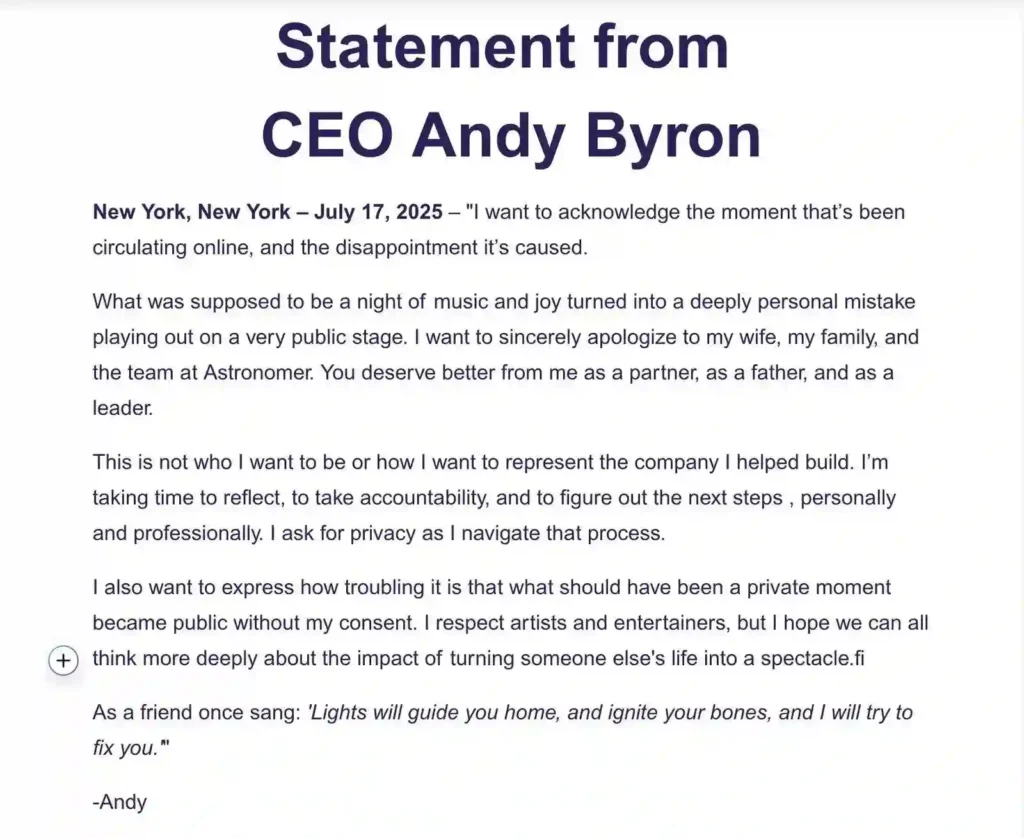
Social media platforms like X (formerly Twitter), Instagram, and even LinkedIn were flooded with screenshots of a supposed apology letter from Byron. The statement, dated July 17, 2025, had all the juicy elements for a viral hit:
- Byron admitted it was a “deeply personal mistake”
- He apologized to his wife, family, and employees
- He said he would take time to reflect and hold himself accountable
- He raised concerns about privacy in the age of viral content
- He quoted Coldplay: “Lights will guide you home, and ignite your bones, and I will try to fix you”
These points made the statement seem authentic. The emotional language, the corporate responsibility angle, even the pop culture reference — all perfect ingredients for high engagement content.
Want more exclusive updates like this?
But Here’s the Truth: The Entire Statement Was Fake
After deep digging by multiple sources, the so-called apology statement was exposed as completely fabricated. Neither Andy Byron nor Astronomer issued any official comment on the incident.
The account that originally posted the apology, under the name Peter Enis with the handle @PeterEnisCBS, was soon suspended by X for violating platform rules. There is no such person associated with CBS News or any verified media outlet.
Additionally, Astronomer’s official X account, @astronomerio, never posted any apology or clarification, despite claims by various users.

This is a textbook example of misinformation going viral, especially when social media users don’t verify facts before sharing.
Why Did People Believe the Fake Apology?
This is a classic case of what psychologists call confirmation bias. People see something that aligns with what they expect — in this case, that a CEO caught in a compromising situation would apologize — and they accept it without checking the source.
Plus, the emotional apology, the hint of corporate accountability, and the poetic Coldplay reference made it irresistible clickbait.
For creators and marketers, this shows the power of storytelling and relatability in driving viral content. For readers, it’s a warning: not everything shared online, even with screenshots, is real.

Why Do Viral Scandals Like This Spread So Fast?
The social media algorithm thrives on controversy. More outrage equals more engagement, which means platforms like X, Instagram, and TikTok push such content to the top of your feed.
This is also why viral news, especially involving high-profile individuals.
The Real Damage of Fake Statements
While some users might see this as just online drama, the impact can be very real. Fake statements can damage reputations, affect stock prices, and even lead to legal troubles.
For CEOs and public figures, this incident is a harsh reminder of the importance of reputation management in the digital age. Every public action — or even a hug caught on camera — can spiral into an online spectacle.
What Should You Do When You See Viral News Like This?
- Check official sources: Always verify with official company pages, verified news outlets, or the individual’s real accounts.
- Search for fact checks: Websites dedicated to debunking fake news are your friend here.
- Question screenshots: They’re easy to fake. If there’s no post on the official source, it probably didn’t happen.
FAQs
What did Andy Byron say in his statement shared on social media?
The viral statement claimed Byron apologized for his actions at the Coldplay concert, accepted responsibility, and asked for privacy. But this entire statement has been confirmed to be fake.
Did Astronomer or Andy Byron release an official statement?
No. Neither the company nor Byron posted any official comment or apology. The viral statement circulating was fabricated and the account that spread it has been suspended.
How can I spot fake viral statements online?
Always cross-check with official company or personal accounts, look for coverage by verified media outlets, and be cautious of screenshots without links.
Final Thoughts
The Andy Byron Coldplay incident is a perfect storm of viral video culture, fake news, and the intense scrutiny public figures face today. The fake apology statement was believable enough to trick thousands, but with a little critical thinking and fact-checking, the truth emerged.
Share your favorite moments with us on Instagram!

Don’t keep this to yourself—share it with a friend!